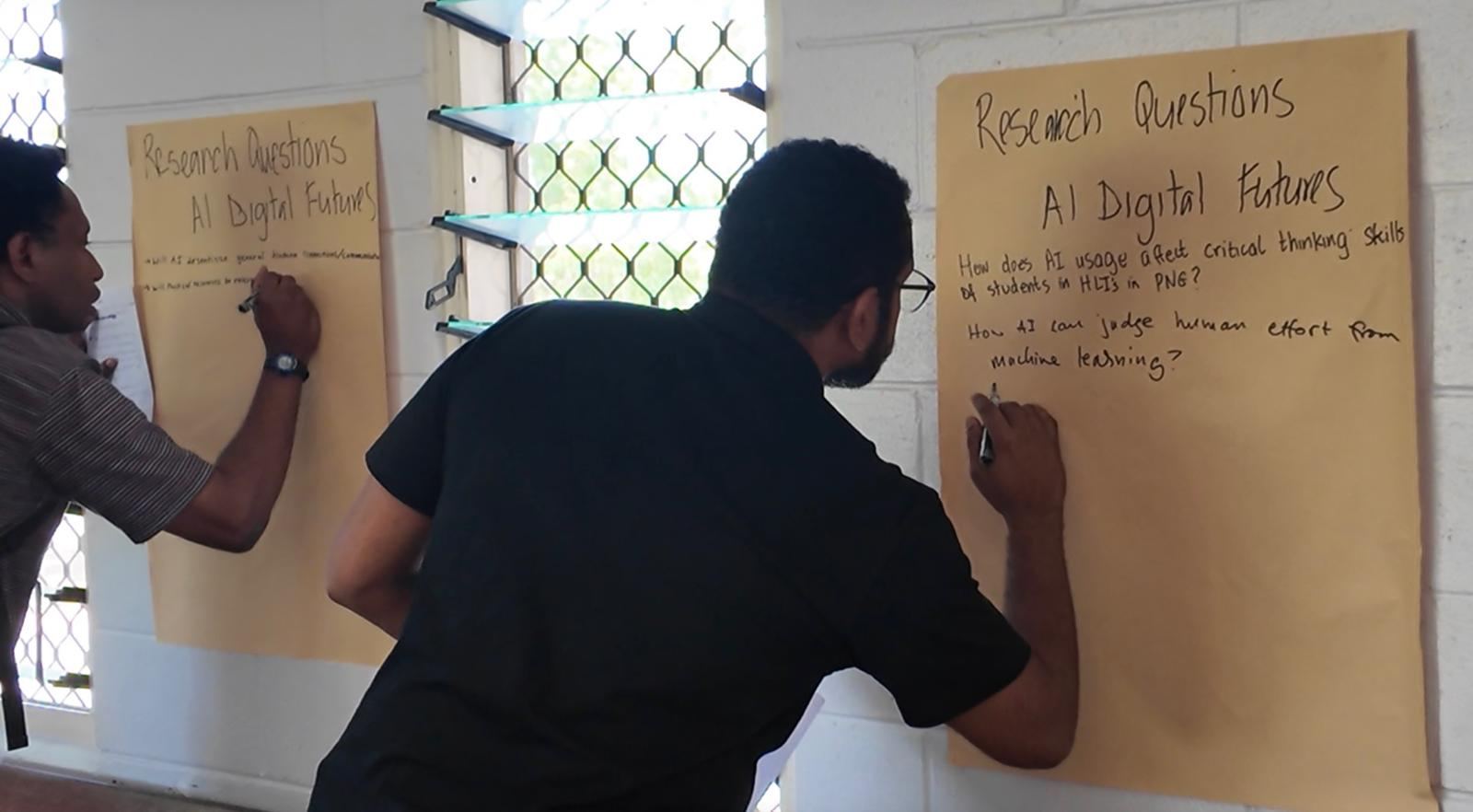
To what extent do students’ attitudes towards learning predict future performance in reading, writing and speaking?How does students’ use of AI affect critical-thinking skills in higher learning institutions (HLIs) in PNG?How does student dependence on AI for scientific problem-solving affect the development of human reasoning?To what extent does AI use risk taking over or weakening human reasoning, and how can students maintain independence in their learning and thinking?How does the use of AI influence nursing students’ learning experiences and clinical performance?How can human effort be distinguished from work generated or substantially assisted by AI?How can assessments in management units be designed to reduce students’ over-reliance on AI?How can students’ outputs and outcomes be assessed in ways that reveal their capability and actual learning?What alternative assessment strategies, beyond Turnitin, can effectively assess students’ learning, originality and academic integrity in the era of AI?What are the differences in student academic performance when LMS assessment tools are used compared with traditional pen-and-paper tests?How do AI-generated questions affect student performance in final evaluations at PNG universities?How can AI support the development of effective assessments for nursing students that increase their confidence in critical thinking and problem-solving?How could teachers responsibly use AI in classroom practice, including in schools from the earliest stages of education?How can nursing lecturers use AI in clinical teaching to enhance students’ competency?How can AI support the planning of teaching and the development of clinical nursing skills and actions among Bachelor of Nursing students?How can AI tools support the development of simulation-based clinical modules for midwifery and nursing students?How can AI support health-care settings, including AI-enabled health services or software, in PNG hospitals?How do pastors use AI to prepare sermons, and how is AI influencing sermon preparation and delivery among pastors in Papua New Guinea?How can AI tools be used to design locally relevant content?How can local content and knowledge be captured, represented and incorporated into AI systems?What methods could be used to develop a Papua New Guinea-specific knowledge base that improves the local relevance and accuracy of AI systems?To what extent can AI support bilingual education and translation between English, Tok Pisin and Tokples?How can the integration of Indigenous Knowledge and AI improve the teaching and learning of mathematics?Is using AI prompting an ethical practice in academic research, and what ethical boundaries should guide its use?To what extent are educational institutions prepared to integrate AI into academic teaching, learning, monitoring and evaluation?What pedagogical and policy frameworks would support the responsible integration of AI in PNG higher learning institutions?How can higher education institutions in PNG develop institutional policies, curriculum frameworks and industry partnerships to support the responsible and effective integration of AI in education, including accounting education?What AI tools are specifically designed for educational purposes and research studies, and what are the benefits of using more than one AI tool?How effective are AI-powered digital features in improving teaching, learning and administrative efficiency?How do institutional support services, such as online tutoring, digital-literacy orientation and technical helpdesks, affect student self-efficacy and satisfaction in PNG online courses?In the PNG context, will physical learning resources remain relevant as AI and digital technologies become more prevalent?Will the use of AI desensitise people to human connection and communication?How do people perceive individuals who use AI to perform tasks, and what effect does AI use have on perceptions of their intelligence, competence and trustworthiness?What types of support systems do nursing students need to enhance their overall wellbeing and mental health?How do delays caused by ineffective email communication from university offices affect university students’ course registration, academic progress, mental health and wellbeing?Workplace bullying: How can it be dealt with?How does spiritual health support resilience and mental wellbeing?How do leaders in higher institutions in PNG contextualize and adapt to innovative changes to improve student learning, wellbeing and institutional performances?How do leaders in Pacific higher education institutions navigate institutional constraints and cultural boundaries to drive meaningful change and innovation?To what extent does culturally adapted leadership and management training improve leadership effectiveness across institutions in the Pacific region?How do HEI leaders contextualise PNG Vision 2050?How do academics across Sonoma and PAU contextualize usage of Canvas?How do we contextualise and respect new ideas in our organisations and institutions?How do we utilize collective decision making to remediate passive rejection?What strategies support team members’ adaptation to organisational change?How is leadership shared in the process of change and innovation within different faculties at PAU?How do school leaders’ leadership practices affect teachers’ willingness to participate positively in school initiatives?How effectively does the current STEM program in PNG’s National Schools of Excellence prepare students to become independent researchers?How does STEM curriculum effectively improve learning at selected schools where STEM curriculum is offered in PNG?How best can STEM education be implemented in schools other than the National Schools of Excellence?To what extent does access to STEM learning resources affect secondary students’ achievement and interest in rural PNG?How can contextualised STEM pedagogies promote local innovation and community-based solutions?How do different types of assessment impact students’ output in solving real-world problems?How can STEM education contribute to national development priorities in PNG, such as food and water security and climate adaptation?What practical steps should a higher learning institution in PNG, with different disciplines and areas of emphasis, take to effectively use STEM to prepare students to solve real-life challenges in communities?To what extent do students’ attitudes towards learning predict future performance in reading, writing and speaking?How does students’ use of AI affect critical-thinking skills in higher learning institutions (HLIs) in PNG?How does student dependence on AI for scientific problem-solving affect the development of human reasoning?To what extent does AI use risk taking over or weakening human reasoning, and how can students maintain independence in their learning and thinking?How does the use of AI influence nursing students’ learning experiences and clinical performance?How can human effort be distinguished from work generated or substantially assisted by AI?How can assessments in management units be designed to reduce students’ over-reliance on AI?How can students’ outputs and outcomes be assessed in ways that reveal their capability and actual learning?What alternative assessment strategies, beyond Turnitin, can effectively assess students’ learning, originality and academic integrity in the era of AI?What are the differences in student academic performance when LMS assessment tools are used compared with traditional pen-and-paper tests?How do AI-generated questions affect student performance in final evaluations at PNG universities?How can AI support the development of effective assessments for nursing students that increase their confidence in critical thinking and problem-solving?How could teachers responsibly use AI in classroom practice, including in schools from the earliest stages of education?How can nursing lecturers use AI in clinical teaching to enhance students’ competency?How can AI support the planning of teaching and the development of clinical nursing skills and actions among Bachelor of Nursing students?How can AI tools support the development of simulation-based clinical modules for midwifery and nursing students?How can AI support health-care settings, including AI-enabled health services or software, in PNG hospitals?How do pastors use AI to prepare sermons, and how is AI influencing sermon preparation and delivery among pastors in Papua New Guinea?How can AI tools be used to design locally relevant content?How can local content and knowledge be captured, represented and incorporated into AI systems?What methods could be used to develop a Papua New Guinea-specific knowledge base that improves the local relevance and accuracy of AI systems?To what extent can AI support bilingual education and translation between English, Tok Pisin and Tokples?How can the integration of Indigenous Knowledge and AI improve the teaching and learning of mathematics?Is using AI prompting an ethical practice in academic research, and what ethical boundaries should guide its use?To what extent are educational institutions prepared to integrate AI into academic teaching, learning, monitoring and evaluation?What pedagogical and policy frameworks would support the responsible integration of AI in PNG higher learning institutions?How can higher education institutions in PNG develop institutional policies, curriculum frameworks and industry partnerships to support the responsible and effective integration of AI in education, including accounting education?What AI tools are specifically designed for educational purposes and research studies, and what are the benefits of using more than one AI tool?How effective are AI-powered digital features in improving teaching, learning and administrative efficiency?How do institutional support services, such as online tutoring, digital-literacy orientation and technical helpdesks, affect student self-efficacy and satisfaction in PNG online courses?In the PNG context, will physical learning resources remain relevant as AI and digital technologies become more prevalent?Will the use of AI desensitise people to human connection and communication?How do people perceive individuals who use AI to perform tasks, and what effect does AI use have on perceptions of their intelligence, competence and trustworthiness?What types of support systems do nursing students need to enhance their overall wellbeing and mental health?How do delays caused by ineffective email communication from university offices affect university students’ course registration, academic progress, mental health and wellbeing?Workplace bullying: How can it be dealt with?How does spiritual health support resilience and mental wellbeing?How do leaders in higher institutions in PNG contextualize and adapt to innovative changes to improve student learning, wellbeing and institutional performances?How do leaders in Pacific higher education institutions navigate institutional constraints and cultural boundaries to drive meaningful change and innovation?To what extent does culturally adapted leadership and management training improve leadership effectiveness across institutions in the Pacific region?How do HEI leaders contextualise PNG Vision 2050?How do academics across Sonoma and PAU contextualize usage of Canvas?How do we contextualise and respect new ideas in our organisations and institutions?How do we utilize collective decision making to remediate passive rejection?What strategies support team members’ adaptation to organisational change?How is leadership shared in the process of change and innovation within different faculties at PAU?How do school leaders’ leadership practices affect teachers’ willingness to participate positively in school initiatives?How effectively does the current STEM program in PNG’s National Schools of Excellence prepare students to become independent researchers?How does STEM curriculum effectively improve learning at selected schools where STEM curriculum is offered in PNG?How best can STEM education be implemented in schools other than the National Schools of Excellence?To what extent does access to STEM learning resources affect secondary students’ achievement and interest in rural PNG?How can contextualised STEM pedagogies promote local innovation and community-based solutions?How do different types of assessment impact students’ output in solving real-world problems?How can STEM education contribute to national development priorities in PNG, such as food and water security and climate adaptation?What practical steps should a higher learning institution in PNG, with different disciplines and areas of emphasis, take to effectively use STEM to prepare students to solve real-life challenges in communities?



 Keynote · Day 2
 Keynote · Day 1
 Keynote · Day 2
 Keynote · Day 1